
John 8:12 No one who follows me stumbles around in the darkness. I provide plenty of light to live in.”
Ecclesiastes 1:8 Everything’s boring, utterly boring— no one can find any meaning in it. Boring to the eye, boring to the ear.
1 Corinthians 13:1 If I speak with human eloquence and angelic ecstasy but don’t love, I’m nothing but the creaking of a rusty gate.
———-
“No one who follows me stumbles around in the darkness. I provide plenty of light to live in," says the Lord (1 John 8:12). These words of Christ advise us to imitate His life and habits, if we wish to be truly happy and free from all that darkens our truest inner selves.
Consequently, let each person’s best effort be to study the life of Jesus Christ. The teaching of Christ demonstrates the most excellent way. More excellent than all the advice of a thousand priests or pastors, and the person who has His spirit will find in it a hidden treasure.
Now, many hear the Gospel but don’t care a lick for it because they don’t come at it with the proper spirit. But whoever wishes to understand fully the words of Christ must ultimately try to pattern their whole life on the one who lived the best life ever. The one whom H.G. Wells said “I am a historian, I am not a believer, but I must confess as a historian that this penniless preacher from Nazareth is irrevocably the very center of history. He is easily the most dominant figure in all history.” Jesus.
After all, what good does it do anyone, whether a bishop or businessperson to speak with great learning about the Trinity if they lack humility, and so end up to anger God? Indeed it is not learning or advanced degrees that make a person holy and good, but rather a virtuous life makes them pleasing. Wouldn’t you rather feel the power of confession and forgiveness than know how to define it for Masters level theology students?
Would there really be any benefit to memorizing the whole Bible and the principles of countless philosophers like Kant or Descartes, if we live without grace and without love? (1 Cor. 13:1). Love for God and the will to serve Him alone provide countless more benefit than all the benefits the world has to offer.
This is the greatest of all pieces of wisdom — seek the kingdom of heaven first and put the world’s offerings in their appropriate place, far behind.
Every person getting closer to the end of their life finally encounters this truth about life: it is vain to trust in riches that perish so easily. It is also vain to chase honour and be puffed up with the so-called pride that comes from the stroking of our egos. It is vanity to follow the lusts of the body and to desire things for which severe punishment is imminent. It is vanity to want a long life and yet to care very little about a well-spent, others-first life. It is vanity to be concerned with the present only and not to consider long-term or even eternal things to come. It is vanity to love the things that so easily disappear and not to be mindful of things that bring eternal joy.
Maybe it’s easiest to recall the proverb: "All things are wearisome, more than one can say.”
The eye never has enough of seeing, nor the ear its fill of hearing." (Eccles. 1:8) So, turn your heart from the love of things visible and turn your efforts to things invisible. For those who follow their own evil passions taint their consciences and lose the light of God’s grace in their life.
—————
When one goes to Israel, a must-see is the town of Bethlehem. It marks the geographical beginning of Jesus' journey and often, the beginning of the pilgrim's journey. At the Church of the Nativity, people are lined up to get in. Same sight every time you go. Dozens and dozens of people form a queue to enter the church, witness how the sight has been honoured by several traditions that lay claim to it, and then head down a flight of stairs to touch the stone of the site marked as the traditional site of Jesus' birth in the manger/cave.
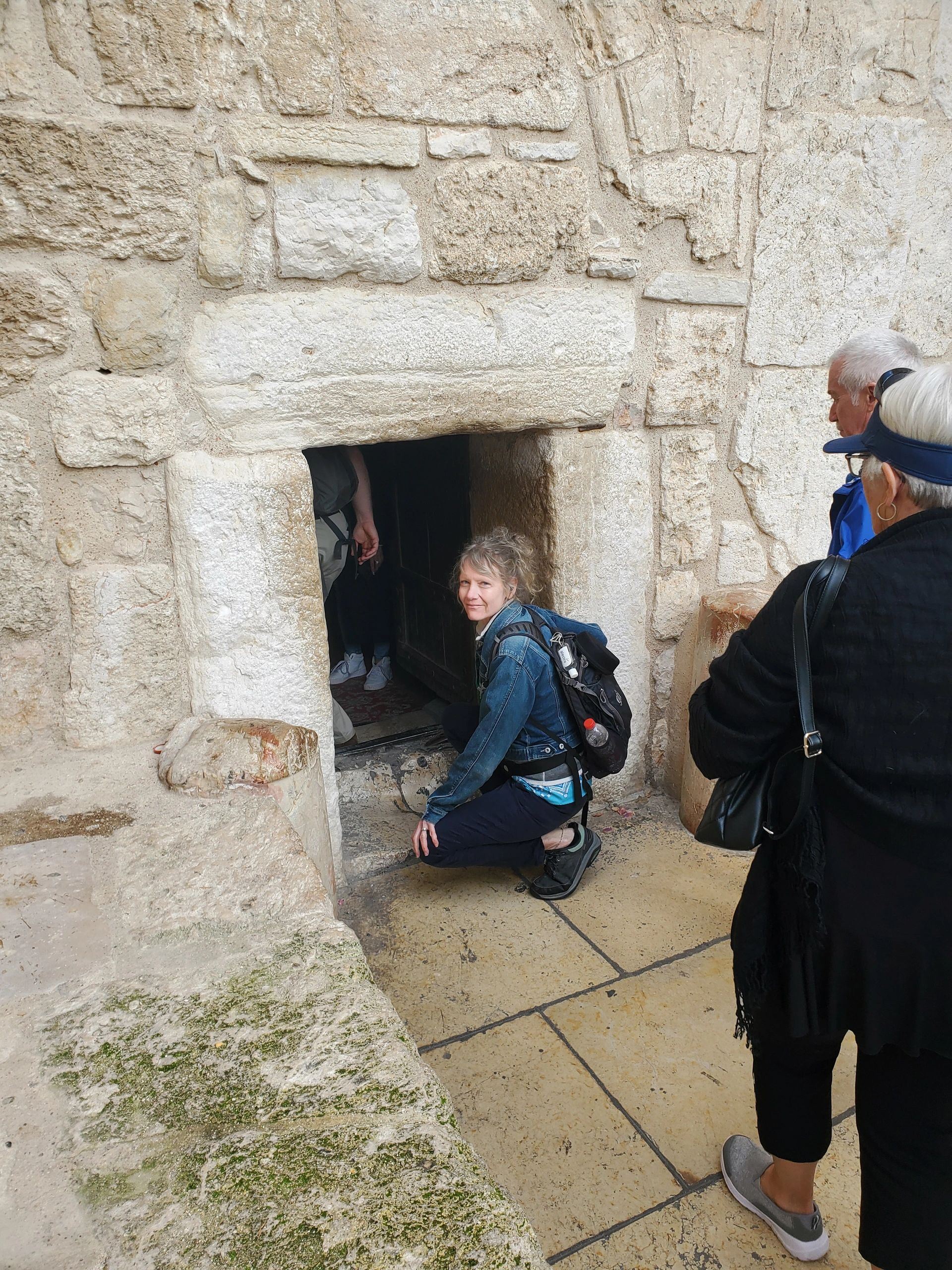
In this way, it is not much different than the many other sights around Israel, Jordan, or Palestine that lay claim to places where Jesus spent time. But Bethlehem, the beginning of the journey is different. It's different because it forces the pilgrim tourist to bend low through a small doorway to get into the church. It is almost a half-door; so that someone needs to bow or crawl to walk toward the 'holiness' of what is there. How appropriate!
It is also a reminder of what Jesus did to come to earth. He made himself low. Well, to be truthful, the Bible actually says "he made himself nothing" (Philippians 2:7). And that is precisely the point. Paul, in that same Philippians passage, commands us to do the same if we wish to Imitate Christ.
And so does Kempis. This first chapter sets us in just the right posture. And it will continue for all the chapters to come. It is the posture of a Christian. It is the posture of a leader. And it should be the posture of Christian organizations.
Lead well! Lead humbly.
Rev Dr Darren Roorda
Shepherd Consulting